Page Views

Wednesday, 24 April 2013

Get your writing out there!

I've always been a bit scared of posting my writing online - I mean, it's mine. What if someone else steals it?
It's taken me a while to realise that even if someone does steal an idea or a chunk of text, they won't get far with it. If they're out thieving, they probably haven't got the ability to finish a story so nothing will happen if they come                  
                                                          across your writing.

Now that this fear is out of the way, put your writing to the big wide world! There are so many websites that you can use to promote your own writing and post it. I am a recent Wattpad convert, after years of not being too big on posting my stuff on the internet (if you haven't heard of Beth Reekles, look her up!) and I'm learning it's quite fun. I can post my stuff in installments of one story (great for novels) or little pieces of their own merit.

Of course, there are many more websites out there and I could exhaust myself listing them all but a quick google search for "writing websites" can easily churn up hundreds of different sites. Do a bit of reading around to find the right one for you. I settled with Wattpad because I've heard a lot of good stuff about it - also, agents and people in the literary world are known to occasionally find something they like there. It's worth a try! Even published authors are known to post their work on the site, too. It's a great place to meet likeminded people, all striving for that bit of recognition.


Of course this was coming: my shameless plug. But this is my blog after all, and I'd love to promote my work (it hasn't even got 50 reads yet!) so every little counts. Send me a message if you have any questions or concerns.

http://www.wattpad.com/story/5275996-alphabet-soup

Happy Writing!

- Lydia

Saturday, 9 February 2013

Revising your book: it's not so scary

Ever since I started writing, I've been plagued by the thoughts that at the end, it'll need months of revision and hard work and the story will end up being totally different from what I wrote in the first place. Most of that is probably true but if you truly love the idea, it won't be so hard.

I recently finished the first go at revising a book I wrote in the summer of 2011, which seems so long ago now. I left the book for so long because I had fun writing it for the remarkably short two weeks it took - not something I've replicated yet! - and because I had no hope of anything professional for it - it was just something for me. Then I noticed it the other day and thought, hmm, why not start revising it? I took a hard copy and a couple of highlighters and spent a few days pawing through the pages, often highlighting whole sections that made no sense or where the "find and replace" function had gone horribly wrong, or I'd made stupid spelling/grammar mistakes. But because I'd left it so long - which I recommend highly - there were some really great bits I'd forgotten about. Any faith I'd lost from the stupid bits was made up for by the odd gem I stumbled across amongst those newly colourful pages. It's worth it.

Now that I've changed all the glaring errors and a few tiny mistakes, I'm a lot more confident in my writing. I fixed the odd plot hole and tied up loose ends. There's still a long way to go before it's a beautiful, polished book but I've made the first few steps and those are the ones that count the most. Had I not made the effort to revise it, I wouldn't have been inspired to write a sequel. I had forgotten how much I loved that set of characters and through the revision period, I was enlightened and desperate to continue their story. I encourage you to do the same.

Lydia

Don't hold back for the first draft!

You may want to get everything perfect the first time round but this won't happen. Don't worry about it like I did - it's easy to go back and change things once you've got the first draft down because then you've got the bulk of the story and you're just tweaking it, rather than coming up with the new words to move the story along.

I spent years being too scared to write the stories I wanted to write and use the names I wanted to use in case they weren't "right" in the end, even if it was just for stories I was writing for fun, for only me (and a few friends, perhaps) to see. I was scared to use lyrics from songs, or film titles or brand names in case I'd have to get rid of them at the end. Then I realised, why not just use them for now? There's no point spending days worrying about using a real town's name when a) it'll end up being changed in the end anyway and b) you should be getting on with the actual writing rather than fussing over little details. That comes with revision, another thing I've always been terrified but it's not as scary as I thought. That'll come in another post.

The gist of this post is: get the words down, whatever they are, and worry about the changes later. Especially if it's an idea you're only writing for yourself. I recently finished revising a book I wrote about eighteen months ago and it was one I didn't hold back on at all - I just wrote what I wanted because I had no want for it to ever be published, and I finished writing it in two weeks. It has ended up being the favourite of the books I've written, mostly because I had such fun writing it. Writing shouldn't be a chore, it should be a release, an escape. So don't hold back.

Lydia

Wednesday, 16 January 2013

Don't be afraid to return to an old idea!

You keep coming up with new ideas. Every time you sink your teeth into a good story, another idea comes along and sweeps you off your feet like a new romance, only for you to realise that after all, it wasn't that great. But you don't want to return to the old ideas because that wouldn't be loyal to your new ones, your ever changing creativity, right?

WRONG!

For a very long time, I hated going back to old ideas because I didn't think I could ever get them right if it didn't work the first time or if I just never got round to finishing it. It's usually just down to me being distracted by a newer, seemingly better tale to tell. You have to remember that once upon a time, your old ideas were the new, shiny ones that keep popping up. And the new, shiny ones will soon become the old dusty ones you forgot about. No matter what you say, those new ideas will keep arriving and the old ones will be slowly gathering dust in the corner.

It's time to give the old ideas a polish, get them out and look them over. Recently, I wanted to write but I didn't want to carry on just yet with my current projects. Instead of dragging a new story into the mix, I decided to go back to an old story I'd finished in 2010 for Camp Nanowrimo which had lost its last two chapters. I decided, how about I write up those last two chapters again - finally - and revise the story. Now that I'm looking back over it again, it's better than I remember it being. At the time, I thought to myself, this is the story I want to publish first and now I remember why. Those old ideas are often the gems - the little diamonds of stories that came along before you turned into a haggard, jaded writer monster.

Lydia

Sunday, 12 August 2012

Cast Your Characters

Hi everyone! I realise I've been away for quite a while - that's the problem with procrastination and writer's block. Every time I sat down to write a post, I just couldn't think of anything that sounded worthy so I put it off until I thought of something but then, of course, I didn't even try to think of anything. My excuse is that my brain is frazzled from a 60,000 word success at the June Camp Nanowrimo and also, there's another one this month (for which I'm falling behind, really badly). Am I forgiven?

Anyway, back to the topic - casting your characters. I don't mean casting them out on a hook from a fishing boat but imagining who would play them in a film or just having pictures of people who look like your character.

The main piece of advice is don't use people or actors that you know/have heard of because your mind will be tainted with what you already know about these people and your characters will seem flat or copied. If you're desperate to cast Angelina Jolie as your main woman, try not to do it until you've finished writing so it's less official and you have a broader mind. Instead of searching for specific actors or actresses, just search online for generic terms - brown haired girl, teenage guy, that sort of thing. You'll find pictures from all over the place and they won't necessarily be people you recognise. One of the best places to look for characters is hairdressing magazines. There are so many different models to portray skin tones, hair colours and styles so you're bound to find something that could fit one of your characters. I find it quite hard to find male characters but usually the internet does the trick. You could always try male hair magazines or websites or male-geared magazines.

Of course, you may find that you don't need to cast your characters because you have a crystal clear image in your mind of what your characters look like. Perhaps you don't think you should label them as anything in case it changes your view.

Lydia

Sunday, 24 June 2012

In the words of Journey . . .

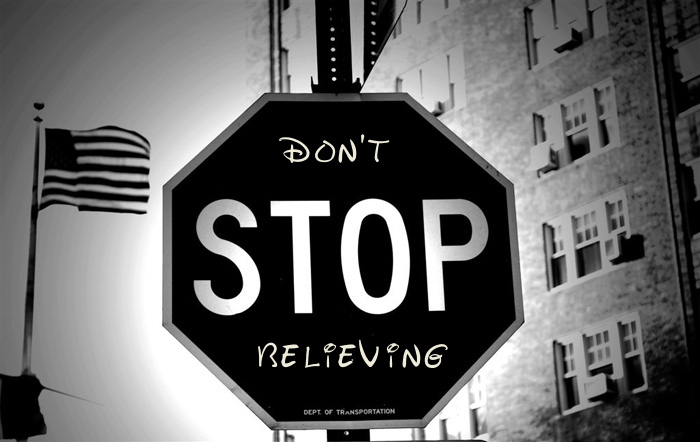
Don't Stop Believing!

After the Glee overhaul of Don't Stop Believing, Journey's song became known nationwide, an iconic tune. And the words are relevant to pretty much everyone: Don't stop believin' / Hold on to this feeling. Journey were onto something there.

Don't ever give up hope when it comes to writing. Everyone has their own voice and sometimes, you need to shout to be heard but rest assured - you're there and someone will hear you. There will be so many times in your writing life when you just want to pack it in and get a job as a grocer. While that may be great (and fantastic for inspiration), it's not you. If you truly believe that you're a writer through and through, it's something you have to hold on to. Perhaps keep the grocer position but keep the writing too. Even if it's only a hobby, don't let it slide.

There was a time a while back when I boycotted writing. Things weren't going well and I didn't want to disappoint myself even further by writing rubbish stuff. I was halfway through the second book in a series and I just stopped. I haven't touched that series since, even though I loved it, because it hurts but I shouldn't have given up completely. For over six months, I think, I didn't write at all, not only that project. I was scared and I lost belief in myself, that I had the capability. The thing is, everyone is capable.

If your project is bringing you down, just put it to one side. Don't get rid of it or you'll regret it. Just set it aside and try something new. Maybe you're writing a utopian fantasy for kids when really your calling is to be writing a crime thriller for young adults. Try experimenting with various genres. For years, I was writing adult chick lit and then I dabbled in fantasy but now I've realised that I'm best at teenage literary fiction. I like to explore possible lives of other people my own age, in different societies and from different backgrounds. Take a look at different genres around or try writing in the voice of your favourite writer. You might find that you enjoy it and want to do your own take on their work.

Whatever you do, keep your faith in yourself. After my long hiatus, I decided to have a go at the first ever Camp NaNoWriMo where I wrote in the voice of an eleven year old American boy fleeing his home town after a government lockdown. While I realised that I wasn't sure about writing in that sort of unrealistic genre, I did learn a lot about my voice. I learnt that I like writing in first person, from the point of view of younger people. I enjoyed being eleven for this book and I'd do it again. I even find that I love to write from a boy's point of view. I never thought that would be my type of writing but I went out on a whim and it was a serendipitous experience.

Lydia

Friday, 22 June 2012

Pinterest for writers

So, at first I didn't really warm to the idea of Pinterest but I read an article earlier that has had me begging for the waiting period to be shorter! Many of you may well know about Pinterest but for those of you who don't, it's like a virtual corkboard where things don't fall off and it can be used for any area you're interested in.

As soon as I was accepted into the site, I set about collecting images for my corkboard: I'm using it as a virtual storage place for all things Novel. My most populated board is for a book I plan to start writing during the August Camp NaNoWriMo (I'm currently doing the June one - 42,000 words in!). I find it helps to be surrounded by these images so that I don't forget my allegiances to my other writings. Instead of filling up pages and pages with detailed descriptions of my main character's girlfriend's step-mum's brothers, I can just pin any photo that piques my interest.

Warning - this may lead to excessive trawling of the internet to find the perfect photos. It's not only photos you can pin. Try quotes or recipes, anything that comes in a picture format or can be found under google images. People have boards for all sorts of different things: fashion designers might pin clothes and designs they like or interior designers might create the perfect rooms. It's your free heaven upon which to unleash your creativity. Let yourself go wild, pinning this way and that - after installing the Pin It button on your bookmark list, you can pin any image from any site directly to your pinterest with the click of a button.

Lydia

Wednesday, 20 June 2012

Naming your characters


A rose by any other name would smell as sweet ... right? Who cares if my character is called Kasey or Laila or Persephone? Well, as irrelevant as it is, names are an important part of your character. It's easier to imagine a scary looking bouncer called Keith than Sandy or a stripper called Candy rather than Wendy. Names do account for a lot but whatever they're called, your character will inevitably grow around the name because of social stereotypes. 

Some may say that giving a character a name is the most important part of the story because a name tells you a lot about their background, nationality and class but that's not necessarily true. An upper class family of posh toffs could call their children Wayne and Sharon just as easily as a lower class family could call their children Rupert and Clementine. It depends on the parents so that doesn't come into it but names do matter. 

If you're really struggling, just give them a name: any name will do. In the first book I ever wrote, I called a guy Wendell (I don't know why - I had never heard of the name before) and I didn't like it. However, the guy grew into it and I found that I couldn't change it because it was his name already. 
Another example is with this month's Camp NaNoWriMo - I just started writing and the first name that came to mind was Roger. It doesn't really fit my character (a bumbling sixteen year old boy) but he's grown into it too. He's awkward and a bit cynical and old before his years, yet lovable. I hope. 
Your character's name will become a part of them - people will give them nicknames and make jokes if they can. Whole conversations can come about from characters' names so it may serve you well to think it through in depth, picking time and age appropriate names but in my experience, it's more fun to pick a name first and see what sort of character you create. (On a side note, doing this shows you what type of stereotypes you make!) 

Lydia

Just Start Writing

Having trouble with a story? Perhaps you've been mulling over and idea for a while or you just want to write but don't have any ideas.
Just start writing. If you think about an idea for too long then you'll be afraid to write it down in case you ruin the perfection that you've created in your head and you'll never be satisfied, even though we know that everyone's first drafts are rubbish anyway.
 
As you know, I like to participate in NaNoWriMo and I've realised that the books I actually finish are the ones I've started off the top of my head on the day.
Let your characters lead the way. Perhaps start with a description of a place and then, when you have one, introduce a character into the mix. Let them lead you along: take them by their hand and ask to be shown around the story.

Soon, you'll be teeming with ideas but if not, just take a look around the internet (the NaNoWriMo forums are great - you don't have to be a member to read them) and perhaps take a few quotes. You never know what could spark the next event in your story. Just pick a situation, dump your character in it and watch as they get out. Don't forget to write it down.

For example, I dropped a clueless, "good boy" sixteen year old guy into a party filled with alcohol and kids smoking pot at five in the morning. I had no plans whatsoever for the story but now I'm 35,000 words in and ideas keep flowing in. I know what I want to write and it's exciting.

Be excited by your writing. These are your creations. Don't wait around for someone to tell you to write, or to give you the words. You have to want to write and if you want to, truly want to, then the words will come. They'll overflow and you'll have carpal tunnel by the end but boy is it worth it.

Lydia

Tuesday, 12 June 2012

Timed Writing Sprints

Are you struggling to write? Finding you don't have much to say? It happens all the time, whether you're suffering from the renowned writers' block or perhaps just lacking a little. Try timing yourself. During the months of NaNoWriMo, wrimos (the participants) have an entire forum dedicated to word wars, sprints and timed challenges because this stuff works. If you set yourself a goal, you're much more likely to actually do something.
Try WriteOrDie, a popular website for such use. You can choose how much you'll write, a time period to write within, your delay time and your punishment. The longer you don't write for, the darker red the screen becomes until it either emits an unpleasant noise or in the most vicious of settings, it will start deleting what you've written until you start again. Harsh, I know. That's why it works. It doesn't matter if what you write is rubbish; at least you're writing. You're getting the words down on the page and you'll have plenty of time to edit them later. Try setting yourself a ten minute timer, or longer if you've got a while with nothing to do, and see how much you can write. It might be that you fuss over little details and the timing stresses you out but for many competitive souls out there, timed writing is perfect because it brings out that sense of competition. "If you can write a thousand words in thirty minutes, you've won!" It doesn't matter that there's no real prize - it's reward enough that, even if you don't complete it, you'll have more words than you had before.

Give it a go. Set a timer in a quiet place and just write. You might be surprised with what you come up with.

Lydia

Saturday, 9 June 2012

Feeling blocked? Write a letter

You're bound to experience Writers' Block at some point, it's inevitable, but you don't have to be subservient to it. It doesn't bind you to the ground, unable to pick up a pen. It just means your creative outlets are somewhat lacking. Don't try too hard to write on your current project while you're feeling blocked because the outcome will be forced, crappy writing which just doesn't flow.

Sit back. Relax. Pick up a familiar pen and a favourite notebook (or a keyboard for you technological types) and write a letter. Maybe it's to yourself as the author, or to one of your characters. You never know what you might find through addressing your characters directly. You may even discover a new voice, or perhaps the solution to a sticky situation. It's like whittling down the possibilities: try writing a letter and while it may not work for you, you're one step closer to finding a way to relieve this pain-in-the-arse of a problem. It might just be a confidence issue and in addressing your characters, you overcome your fear of writing. I know that that's often the problem with me. Push past those barriers. Voice your feelings to your creations.

Perhaps Jeff the librarian is really hindering your character's progress: tell him. Let it all out in a letter to Jeff, whining to him about how he's screwing things up. You never know, He might just reply.

Lydia

Thursday, 7 June 2012

Don't Abandon Old Ideas

I'm sure we all do this to some extent, don't we: you're writing a story or a book and suddenly you're bored with the idea, or you want to pursue a new one. That's perfectly normal and while many will say that it's best to stick with the original idea and see it through, I say don't. There's no point in writing something that you're not interested in writing because nobody will be interested in reading it. Save it for when it's exactly what you want to be writing at that time.
This month, as it is the first month of the 2012 Camp NaNoWriMo, I had an idea all set but then disaster struck: my trusty Alphasmart Neo died on me. After replacing the batteries and then taking it all apart, I couldn't figure out the problem (nor could three very technologically advanced acquaintances) so I was distraught. How to do nano if I didn't have my little portable computer? I didn't want to write the idea I had unless it was properly (don't ask me why - because I care about it, I suppose, I wanted to do it right) so I went through idea after idea, trying to come up with something else to do in the three weeks it will take for my new Alphasmart to arrive. I had a great little story in my head - great in that it was warm and cosy and I liked the characters, but it wasn't what I wanted to be writing at the time. I had to change to something else but I know that one day, I may well want to use that idea. Don't throw any plots, plans or bits of writing away because you never know when you might want to revisit it. Keep a box or drawer for old bits and bobs, or pin them on a corkboard as I'm planning to do.

Lydia

Monday, 28 May 2012

"I love pretty things and clever words..."

But your readers do not. It may be great for school essays when there's loads of description and huge long words into which you can read very deeply but your book will just confuse people if you use huge words.

You have to separate your "school brain" and your "bestselling author brain" because they work entirely differently. If you really pare things down, you'll notice that they sound a lot purer and they'll read better too, trust me.

As for clever words, you may think you sound like a literary genius, worthy of all the prizes for use of language but your readers will not be able to understand you and those who do will scoff at you for being pretentious - its a lose-lose situation. You don't want your readers reaching for the dictionary for every time that you grabbed the thesaurus.

Don't leave your reader hanging as they can't understand what you're trying to say. The simpler you say things is often more punchy and leaves more of an impact: if a book jacket leaves me wondering what it meant then I leave it well alone. Don't lose your reader because you wanted to seem clever.

Sunday, 27 May 2012

Camp NaNoWriMo!

Okay, I know I haven't written any fiction in forever but I'm psyched for Camp NaNoWriMo! Last camp, I managed to complete two novels over the two months (well, one novel and two bits of two other half-arsed, unfinished books) then in November, for the first time, I catastrophically failed, with around 15,000 words after thirty days.

Some of you may be wondering, what on earth is NaNoWriMo, let alone Camp NaNoWriMo?
Well, it is the brainchild of this man: his name is Chris Baty in July of 1999. And he has never looked back. NaNoWriMo stands for National Novel Writing Month, which takes place in the month of November. It is described on the website as "Thirty days and nights of literary abandon" which couldn't be more true. 


The website's description: "What: Writing one 50,000-word novel from scratch in a month’s time.
Who: You! We can’t do this unless we have some other people trying it as well. Let’s write laughably awful yet lengthy prose together.
Why: The reasons are endless! To actively participate in one of our era’s most enchanting art forms! To give yourself permission to write without obsessing over quality. To be able to make obscure references to passages from our novels at parties. To stop being one of those people who say, “I’ve always wanted to write a novel,” and become one of those people who can say, “Oh, a novel? It’s such a funny story–I’ve written three.”
When: You can sign up anytime to add your name to the roster and browse the forums. Writing begins 12:00:01 November 1. To be added to the official list of winners, you must reach the 50,000-word mark by November 30 at 11:59:59. Once your novel has been verified by our web-based team of robotic word counters, the partying begins."
To anyone who has never heard of this before, go and check it out!
We're coming up to Camp NaNoWriMo, a new concept of having two extra months of writing during July and August for those too busy in November, or perhaps write more prolifically in those months. I was at first sceptical: how would I ever write fifty thousand words in four weeks? The fastest I'd ever managed before was fifty-two thousand in around eight to nine weeks. I'd have to more than halve that! The year I discovered it, I decided to give it a miss but the next year, I signed up and I haven't looked back since, now having done two NaNos and two Camp NaNos. 
It makes you crazy but I feel free to guess that if you're here, you lost your sanity a while ago, right? Don't worry - there are thousands of others having a crack at it and the website is stuffed full of various forums to rant and vent on. 
The joy of Camp NaNoWriMo is that they try to emanate a real American camp as much as possible, which is great fun for us Brits! You can be put in a "cabin" with five others - you can either choose people you know or opt for a random selection, or those of a similar age/interests/genre. Of course, you can choose not to be a part of a cabin but it's more fun to be surrounded by nutty writers to share problems, plot hiccups and ideas. 
Anyone else planning to take part this summer or in November? Good luck!

Lydia


Writing Stress vs Exam Stress

So, one of the reasons I haven't posted in a while is because of exams - I consoled myself with the thought that as long as I wasn't "wasting time writing" then I'd have more of a chance of actually getting some revision done. That was, hmm, three months ago? Yeah, I never got any revision done because the whole time, I was pining to write my story, to get the words down on the paper but I was terrified.
What if I start it and then leave it?
What if I write instead of focusing on exams?
There needed to be some compromise and I wish I had forced that a little earlier. Too late now: I'm nearly done with exams and I neither wrote nor revised because while I needed to do one, I couldn't stop thinking about the other. It was a horrible circle.

An important thing is to focus. Without focus, what is there? A bewildered mind wondering what to do. I'm still trying to muster up the gusto to just sit down and focus on writing. I have hundreds of notebooks waiting for me and I've picked out a great one; I have my planning. What's holding me back? Lack of focus.

Writing relieves stress. I saw a quote recently that read, "Writing relieves stress because you can put all of that stress build up into an argument between characters."
That's a very true quote and something I've used many a time (though I have to make sure the argument is relevant, of course).

As far as exams go, it's probably best to rest most of your focus on those though I can't talk. Leave a little time aside for writing else you might go completely insane but don't let yourself fail. Here's hoping I haven't!

Any particular methods of balancing revision and leisure?

Lydia

Creative Planning

Planning - I hear your groans. For many, many people, planning is a thing of nightmares; having to intricately plot every movement within your book/piece of work and then pulling out your hair in despair when things change and you don't know how.

I am one of these people: I hate planning because it never goes as planned. My characters are always taking over and controlling their own destinies. I'm just a slave to their needs, writing down what they're telling me to.
Well, I decided that for the book I'm wanting to write (not planning to write, of course) I should have an ounce of control over what goes on so I invented my own way: creative planning.

Apologies for the bad quality photo - on the computer it's so much better but I can't seem to transfer it well.

 This is very loose: there are no rules and you can pretty much interpret it however you want but what I did was collect together a bunch of quotes that I wanted my characters to say or that fitted into the story then I laid them out in order to show a vague story arc. Then I wrote them all onto an A2 piece of paper along with drawings to illustrate each quote. For me, this is the easier method of planning. I have what I need in one place. I do also have a notebook filled with post-it notes covered in quotes and bits I may need, as well as a character outline for three main characters.


Do you have any way of escaping the terror of meticulous planning?

Lydia

Road Trip

I love this picture because it reminds me of many of my favourite road trip books, a niche category that I love.

The image evokes so many thoughts for me but mostly it just makes me desperate to write a road trip book. Even before I discovered how much I loved them, I had written one without realising for NaNoWriMo and as a result, it doesn't have the qualities that a road trip novel should have. As soon as I've finished the one in my head that I haven't started, I think I'll have to do one.

I have fallen in love with the idea that over a long journey, through various places, people can discover more about themselves and the people with them, be it a journey revolving around a couple or a family, or just a group of friends taking a break.

John Green: Genius

Hands up who has heard of John Green? I hadn't until a couple of years ago when I friend suggested I read his book, "Paper Towns." I was sceptical - I never read teenage books because I tend to find they have a fantasy theme and are generally just mushy romance as well. How wrong could I have been. A few months ago, I saw a video on youtube about NaNoWriMo and noticed that it was John Green talking. After seeing that, I finally read "An Abundance of Katherines" which is his second novel. Ever since I read the first page of that book, I have been addicted to his writing. He is a comic genius with a fabulous knack for creating engaging stories.

You may recognise him from his VlogBrothers videos, which he does with his brother Hank and let me tell you: the books are even better than the videos, as hard as that may be to believe. I recommend any one of his books to everybody.

After reading all of his solo novels, I was craving more so I decided to pick up "Will Grayson, will grayson," which is a book he co-wrote with David Levithan, an author I hadn't heard of before. That book was one of the best I've ever read. If you want a really good teenage tale with real, believable teenage characters then anything by John Green or David Levithan is for you. The books are mostly character-driven rather than plot but they're all fantastic. I will warn you though: "The Fault in our Stars" - Green's most recent novel - is heart-wrenching. I'd read it again in a flash because the story is told so wonderfully well by this talented writer but even I cried at the end. Don't let that put you off though. It's so worth it.

From there, I explored more of David Levithan's work - he writes mostly in the voice of gay teen guys, except in the case of his collaboration with Rachel Cohn for the well-known "Nick and Norah's Infinite Playlist." So go for it: broaden your horizons. I've now read all of John Green's books, about four of David Levithan's and I'm looking into Rachel Cohn too. Another similar book is one you may have heard of: "The Perks of being a Wallflower" by Stephen Chbosky.

Ever since first reading "An Abundance of Katherines," I have been completely addicted to teenage road trip books. At the moment, I'm reading "Two Way Street" by Lauren Barnholdt, a tale told from the points of view of a girl and a guy who broke up and are now going on a roadtrip together.

Whenever people have asked who I aspire to be like, as far as writing goes, I never had an answer but now I know for sure that John Green is my idol.

Go out and buy any book by any of these authors, or borrow it from the library. You will not be disappointed.

Lydia

Sunday, 19 February 2012

The Storymatic: simple but brilliant

Recently, I stumbled upon this little delight: http://www.thestorymatic.com/
It's The Storymatic - a box of gold and copper writing prompt cards for character(s) and a situation. The element of randomness that this box employs is what we need a lot of the time. It can be hard to come up with a good idea and sometimes we need that push. Of course, it wouldn't be too much of a challenge to create this yourself, perhaps with a little help from the internet.

What do you think of using prompts?


Comment below


Lydia

Saturday, 4 February 2012

Use Your Memories

I know, this sounds like a really obvious one but I never remember (haha) that my memories can provide a crucial filler for a lingering gap in a story, or perhaps just spark an idea. Everything we experience can be put towards our writing and for many people, it's second nature to hone in on the past. Most of us will find that, upon re-reading our work, we have subconsciously included things that have happened, big or small. Sometimes I feel hesitant to include a memory in case it's too personal, or there's a possibility that someone will recognise themselves (I'm a bit of a stickler for using real personalities because it helps to make my characters more real themselves) and be offended. 
Don't be afraid to make your writing personal because you will be more confident in the facts: confidence equals better writing. 


What do you think? comment below


Lydia