Page Views

Friday, 27 January 2012

Try Something New!

In the words of Joseph Campbell (American writer, 1904-1987), "The cave you fear to enter holds the treasure you seek." Sometimes it helps to just branch out and explore something you wouldn't normally try in your writing. For example, I have always written in third person with my main characters being British women in their thirties or forties but for Camp NaNoWriMo in July, 2011, I decided to write in first person from the point of view of a ten-year-old American boy and it was surprisingly successful. 


If your writing is getting a little stiff or you don't feel that you're getting anywhere with your writing, maybe it's time to take a break from whatever you're writing and start with a new piece, a new area that you haven't touched on before. By giving your mind a rest you will refresh yourself and when you come back to your project, you will have more to say because you're looking at it with new eyes. And hey, who knows, you might find something you really love while taking your break.

I say give it a go - it worked for me and I hope it works for some of you.
Any particular stories about trying something new? Comment below.


Lydia

Thursday, 26 January 2012

Get Rid Of Your Fear

Any young writer will know that it's hard to shake these fears about not being good enough or not having enough experience but I don't think this should be the case. If I had my way, there would be more budding young writers, eager to share and learn.

My advice to you, which will sit well with any fellow pyromaniacs, is to write down every fear you have about writing, or your lack of it perhaps. Maybe you think you can't write characters convincingly enough or your plot is flat. Whatever it is, write it down. It helps a little even just getting those words on the paper and who knows, it might prompt your inner creativity to pour out.

Write it out twice, once in a negative light and once in an optimistic, positive light. Stick the optimistic list up on your cupboard door or fridge, somewhere you'll see it.

Next step is to burn the negative one. There isn't any point in beating yourself up about these little things that every writer will have experienced. You're not weird or abnormal, you're just a beginner or perhaps you never sorted this out earlier and it's hanging over you. I certainly have my issues - I can't believe that anyone would want to read what I write because who am I to expect that it will be worth anything? These are things I'm working on getting rid of and I hope you do too.

Do you have any particular methods for relieving your writing-related issues and stresses?  - comment below

Lydia

Saturday, 21 January 2012

A Photo to Write About

I love this photo because of the emotions it would evoke in the taker. Obviously, it is a photoshopped image but that doesn't detract from the power. Imagine if this was real, if you or your character was in this situation. What would you do? How would you react?Perhaps write a story or an article about this picture or the consequences of the pictures.
-comment below-
Lydia

Friday, 20 January 2012

Paper Vs Technology

As a teenager, I have grown up with all these technological advances, as will many of you, I assume. My house has never not had a computer while I've been around and my phone is attached but I am still fascinated by the paper versus technology debate. I generally find that it is the older writers who stick to paper and the younger, more technologically advanced who are advocates for the computer as a writing tool.

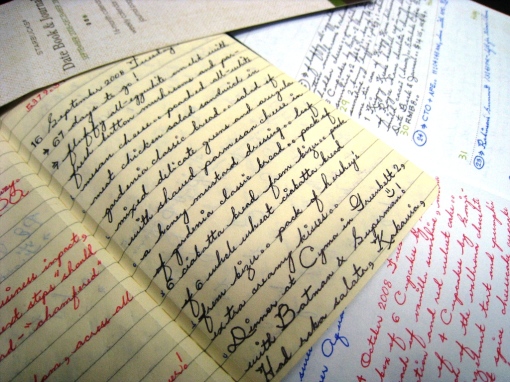
I use both. As a child, I always used pen and paper because I wasn't that sure on how to use a computer but as I grew older, I became addicted to using a laptop or computer to note my thoughts. Of course, that was until the great disaster of 2010. My beloved laptop, where I stored everything including my most recent project which was sitting at 20,000 words, decided to devour 8,000 words. I think I may have cried. And shouted. And sworn, a lot. Luckily, because of my past with pens and paper, I had a fair amount of it scribbled down in various notebooks, along with copious notes. Still, it was pretty devastating. I stayed up all night, copying out the bits and pieces I had while racking my brains for the missing parts of the puzzle.

I never did get it all back. The file with the original copy had magically become encrypted by some evil computer powers, even the back-up on my memory stick was dead as a doornail. When I read it back a while later, I realised that some parts didn't make sense because the linking scenes, or scenes of origin, were gone forever and my memory isn't great at the best of times.

However careful I try to be with computers and technology, tip-toeing around them so they don't eat my work, I still have slip ups. I'm constantly closing my millions of tabs or deleting bookmarks by mistake, or perhaps not noticing the computer's low battery until I've written 2,000 words with no save and it dies. It took far too many occurrences of me deleting blog posts and rewrite the entire things, only to find out that they were automatically saved!

I may be sounding much older than fifteen with this rant but I think it's a valid point: not only should you back up your work but try to have fairly recent paper copies too. It's not worth the heartbreak after all!
That is why for my most recent book, I have written it all in a notebook. (Although it's also because I just love a good notebook, but that's beside the point.)


Do you prefer paper or computer? - comment below!

Lydia

Writing and School: The Juggle

Probably the worst thing about being a young writer is the juggle between overwhelming school work and the pressing ideas in your head, begging you to pay attention to them. There must be some sort of balance but finding it is tricky - I still haven't. I find myself immersed in writing for hours when I should be revising. I just can't resist the temptation of my battered A4 notebook, crying out for me to write in it, to fill its yellowed pages with smudgy black ink.


During lessons, my mind is constantly wandering and I've taken to carrying around three different notebooks with me at all times, just in case. I'm a paranoid writer: I'm convinced that all my pens will run out of ink so I carry - at last count - a grand total of forty, scattered in the bottom of my bag, with the notebooks for different things. My big white one is for my current story and any notes on it. The little brown one is to make a note of any interesting people or conversations I see/overhear, usually in coffee shops.

My addiction to notebooks doesn't help. It seems that anywhere I shop, I will buy a notebook, whether it's 50p or £7, just in case the three in my bag run out of pages or disappear. I worry about not having anything to write on more than I worry about getting a bad report at school; probably an unhealthy attitude but it's just so hard to break! I suppose the one benefit is that I generally do well in the creative subjects.

I would advise to steer clear of my method, if you can call it that. I try to let my writing wait but I don't want to lose my ideas. If you know something is going to play on your mind and distract you, I would advise you to write it down so you know that it's there, in case you forget. Just don't become like me, a work-shy writeaholic!

Do you have any working balances? - comment below!

Lydia

Why I Write

Whenever I've asked any of my writing friends how they got into writing, they usually just say, "Oh, I've been doing it all my life," but there is often some reason why they wanted to write. I know quite a few people who do it because it sounds intellectual and want to be different though I'm sure we all know that for those people, it's a short-lived fantasy. Once they've been going for a few years, they can then be taken seriously. 

I'm ashamed to admit that I'm at risk of becoming one of those people who just says, "I've done it forever!" because I have, I've been writing for longer than I remember though I can still recall my first two proper stories: a nine-page epic about a boy who finds a baby on his doorstep with some sort of magical stone (reading back on it, it was a shameless rip-off of Harry Potter, though it didn't cross my mind at the time!) and then there was a five page little thing about a girl called Winter who appeared to just wander around in the snow, until she was taken in by a friendly couple. Now that I write about it, I see that it was less of a story than an extract.  Perhaps my earliest ever story though, was a short piece about a crab called Clipper who was bullied, along with his sister, until they stood up for themselves and the bullies were sent away. I must have only been about five years old at the time, and I had never been bullied or experienced bullying. Where do we get these ideas from?

My question is how did you start writing? It's a tough one to answer because it's true that for many, it's just second nature. I think I owe it to my primary school English teacher who pushed me to write creatively because she knew I enjoyed it. I can honestly say that I've never looked back. From the ages of about five to eleven, I tried my hand at illustrating my own stories but it never worked - I guess it doesn't help that I can't draw people at all!

I'm lucky to have always had a supportive family and a whole hoard of teachers who respect what I do though I know that there are some people who have had to hide their writing for fear of being mocked or disparaged. What I say is BE PROUD of your writing; even if your friends laugh at it or your family disagree, it doesn't mean you should be any less proud. It's one thing to be a writer but it takes a whole lot of guts to keep it up and still want to do it. Never lose that sense of self and pride. There will be rough points but the joy of starting writing when you're young is that you can see yourself grow and evolve. I look back at pieces from just a few months ago and I'm amazed at how far I've come.

Why do YOU write? - comment below!

Lydia

Thursday, 19 January 2012

Your Role as a Writer

AUDIENCE
You may think that you are writing for yourself and your own pleasure but I'm sure that at some point, you will want people to read what you've have written and for it to have an effect on them. That's what I am aiming for with this blog, after all.

As the writer, you play a huge role in delivering the right material in the right way. First of all, you must identify your audience. All that means is you need to figure out what sort of people you want to be reading your writing: for me with this blog, I am aiming at readers and writers of all ages whom I can help with their writing, rather than elderly men who enjoy fishing.


You won't get far if you want to write a self-help book on smoking for children but retune your audience to middle-aged men and women and you're off!

Once you have decided on your audience, you need to think of methods - these differ depending on who's reading the writing. Children enjoy a simple plot with a happy ending whereas many adults will delve into a complex, unpredictable (though not ridiculous) plot with any type of ending, as long as it satisfies.

Although writing is a very personal craft, the idea is to tune it to your readers so they will get the most out of it. This may involve cutting parts that didn't work, no matter how amazing or well-written they were. Writing is a sacrifice.

GENRE
What sort of story do you want to write? This is your genre. For a tale about girl-meets-boy, your genre would probably be chick-lit or young adult. You have to research your genres beforehand and check that your story fits into one. You may find that your book is very character orientated but don't worry - that would settle in the genre of literary fiction. For every book there is to write, you will find a genre, be it crime, historical fiction or adventure. 


Keep your genre in mind as you write - try not to veer off the tracks and venture into other territories as your readers will be confused and unsatisfied if the action-packed adventure story morphs into a romantic chick-lit. Don't get me wrong, it's perfectly fine for a romance to evolve over the course of an adventure book but don't let it take over. Remain in control of your story, plot and characters, like a dog on a lead. You can give all three some leeway and the sense of control but ultimately, you're the commander.
Here is a useful site with genres: http://www.dailywritingtips.com/35-genres-and-other-varieties-of-fiction/


THINGS TO REMEMBER
The reader comes first: your job is to satisfy their wants and needs.
Make sure the book is what it says on the box.
Don't disappoint anybody.
Keep in control.
Have fun!

Please post any questions and comments below, or email me.

Lydia